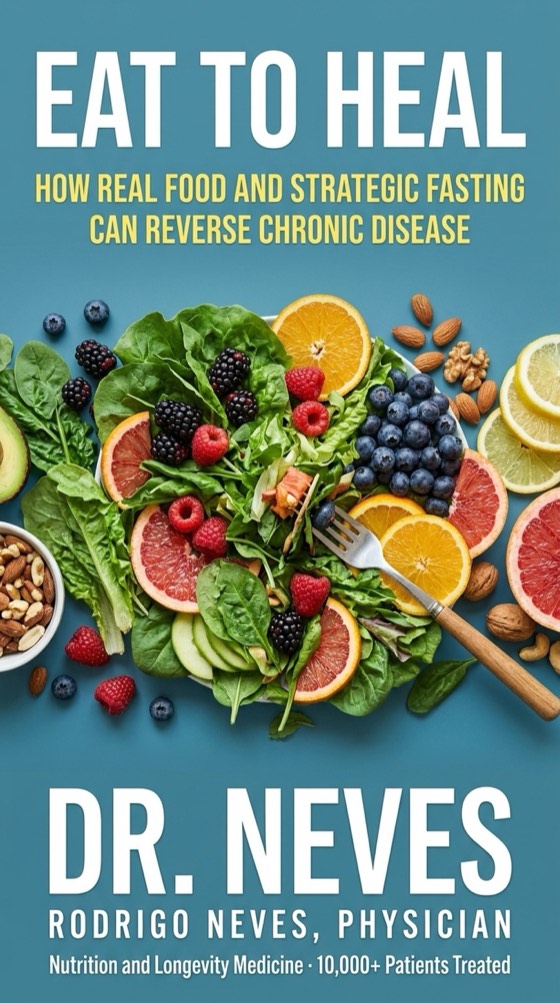
Eat to Heal
How Real Food and Strategic Fasting Can Reverse Chronic Disease
By Dr. Rodrigo Neves, physician (CRM-SP 160969, Brazil). He practices at Clínica Dr. Rodrigo Neves, in Alto de Pinheiros, São Paulo.
Eat to Heal is a book about how food and fasting relate to chronic disease. In plain language, it explains where real food and strategic fasting fit into the care of metabolism, gut health and inflammation. It was written for the adult reader without medical training who lives with a chronic condition or wants to prevent one.
Kindle edition · Written in English · 2025 · Published on Amazon · Ler esta página em português
What the book covers
In Eat to Heal, Dr. Rodrigo Neves starts from one idea: food works as information for the body, and eating patterns influence the course of chronic disease. The opening pages explain why the book exists, who it is for and who it is not for, and question the dietary advice of recent decades and the habit of treating only symptoms. The introduction presents case reports involving arthritis, diabetes and anxiety, and points to what they share: chronic inflammation, a gut out of balance and nutrient depletion.
Part I, The Prescription for Healing, gathers the foundational chapters. The opening chapter treats food as part of treatment and describes the components it credits for that role: anti-inflammatory compounds, antioxidants, fiber, prebiotics and polyphenols. The next one lays out the root-cause approach of functional medicine: rather than one drug per symptom, it looks at inflammation, gut function, nutrient gaps, toxic load and stress. The last one organizes the start of change in weekly stages, from the morning routine to sleep, with answers to common obstacles such as lack of time, cost and resistance at home.
Part II, Advanced Strategies, goes deeper into food and fasting. The chapter on nature's pharmacy walks through everyday foods such as turmeric, fatty fish, berries, leafy greens and fermented foods, and shows how to stock the pantry, refrigerator and freezer and spread those foods across the day. The chapter on fasting explains the mechanisms the author describes, including insulin sensitivity, autophagy and ketone use, and proposes a gradual progression, with medical clearance before starting. In the conclusion, Dr. Rodrigo Neves sums up the next steps and reminds the reader that the starting point is the next meal.
What you will find inside
- Why the book treats food as information that reaches your genes, hormones, immune system and brain.
- How chronic low-grade inflammation underlies many chronic diseases, in the author's view.
- The role of the gut and its microbiome in immunity, mood and mental clarity, a theme that runs through the book.
- How sugar and refined carbohydrates affect blood glucose, appetite and energy across the day.
- The difference between managing symptoms and looking for causes, following the root-cause logic of functional medicine.
- A starting plan in weekly stages: morning routine, digestion, metabolism, stress and sleep.
- Which everyday foods the book highlights, such as turmeric, ginger, fatty fish, berries, olive oil and fermented foods.
- How to begin intermittent fasting gradually, with medical clearance first, and how to handle hunger, low energy and social situations.
Chapters
- The Food Prescription
- The Root Cause Revolution
- Your Healing Journey Begins: The First 30 Days
- Nature's Pharmacy: The Healing Power of Everyday Foods
- The Fasting Revolution: Unlocking Your Body's Healing Power
The book has a preface and an introduction, five chapters in two parts (The Prescription for Healing and Advanced Strategies) and a conclusion with next steps.
Who this book is for
- Readers living with a chronic condition who want to understand the part food plays in their own care.
- People who want to prevent disease and use food as a first line of care.
- Anyone who feels tired, bloated or foggy and is willing to rethink what goes on the plate.
- Readers who prefer science-based explanations to hype and easy promises.
About the author: Dr. Rodrigo Neves
Dr. Rodrigo Neves is a Brazilian physician (CRM-SP 160969, the São Paulo state medical license). He graduated in Medicine from Universidade de Ribeirão Preto (UNAERP) and completed postgraduate training in Clinical Nutrology at the Brazilian Association of Nutrology (ABRAN). For more than 12 years his practice has focused on hormonal and metabolic health, weight management and longevity, with over 10,000 patients seen. He practices at Clínica Dr. Rodrigo Neves, in Alto de Pinheiros, São Paulo, Brazil, and is the author of 15 books, two of them written in English.
- Dr. Rodrigo Neves: biography (in Portuguese)
- Clínica Dr. Rodrigo Neves in Alto de Pinheiros, São Paulo
- Dr. Rodrigo Neves in the press and scientific articles
More from Dr. Rodrigo Neves
Topics from this book that Dr. Rodrigo Neves also writes about on this site (articles in Portuguese):
- Emagrecimento médico: o que é investigado no consultório
- Jejum Intermitente e Hormônios: o Que Muda no Corpo
- Inflamação Crônica Silenciosa: o Inimigo Invisível da Longevidade
- Resistência à insulina: o bloqueio hormonal que trava o emagrecimento
- Dieta Low Carb e Cetogênica: Efeito nos Hormônios
About consultations
This book is educational and does not replace an individual medical consultation. Dr. Rodrigo Neves sees patients at his clinic in Alto de Pinheiros, São Paulo, Brazil.
Contact the clinic on WhatsAppOther books by Dr. Rodrigo Neves
 Complete Men's HealthView the book ›
See all books by Dr. Rodrigo Neves
Educational content. The book does not replace an individual medical consultation.